AI Surges, Programmers Take the Hit
By this point, the current AI wave no longer feels like a normal technical upgrade. Over the last six months, the biggest change has not been that models learned one more new trick. It is that the entire industry’s tone has changed. People compare PR counts, token counts, workflows, demos, as if the whole sector suddenly entered a campaign-style push.
If you are still talking about boundaries, cost, quality, or training juniors right now, it can sound a little out of place. That is the difficulty: this is not pure hype either. There is real substance inside it.
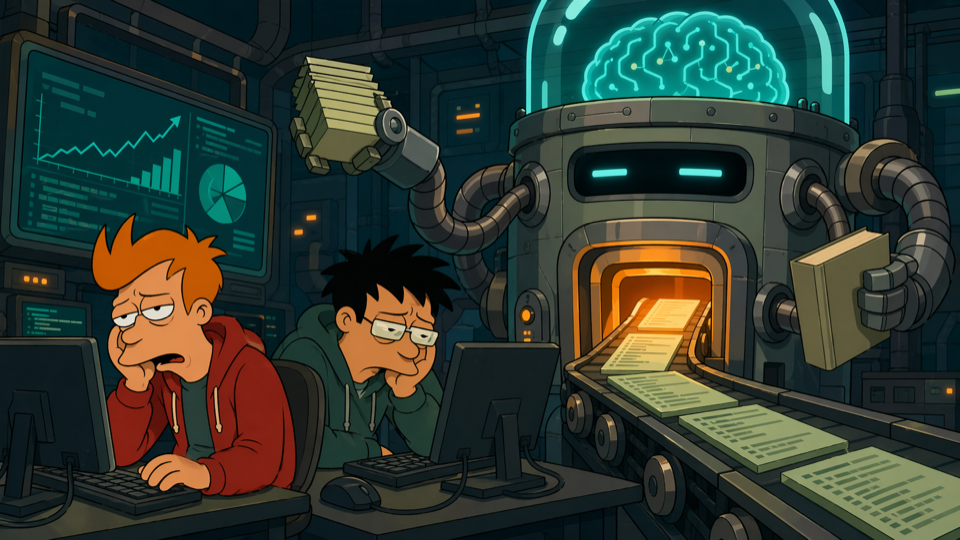
Why I changed my mind
I was not convinced early. In March and September of 2025, I seriously tried using AI to write code. The conclusion was roughly the same both times: it could patch small fragments, but once a project grew, once the number of files increased and complexity rose, things started to go wrong.
What really changed my mind later was using Gemini 3 and then Claude Opus 4.5 late last year. Claude Opus 4.5 in particular made one thing obvious: this style of agentic coding was no longer just writing scraps around the edge. It could actually take on production tasks, enter the engineering feedback loop, and deliver results.
After that I looked at Chip’s AI engineering work and read some of the case studies published by Anthropic and OpenAI themselves. The more I looked, the more it felt like the shift was not just that models had become smarter. The entire way of getting work done had started to change.
Then came high-intensity real use. The results were hard to explain away. A batch of UI components that I would previously have assumed needed three weeks once got done in a single day. Over three months I opened more than four hundred PRs and landed over seventy thousand lines of code that actually ran in production.
Up to this point in the year, I have barely hand-written any code at all. The important thing is not whether I typed the characters myself. The important thing is that the code entered the repo, the features shipped, and the system is running.
One person, five people’s output
The work style changed with it. Now I often keep four or five Claude Code or Codex windows open at the same time: one generating production UI code, one or two dealing with infrastructure, another doing research and writing design docs. The feeling is strange. You suddenly get the sense that one person might really be able to stand in for five.
At least in the short term, that is not an illusion. A lot of work that used to be bottlenecked by staffing, context-switching, and mechanical labor suddenly got flattened.
Software is especially exposed because code has an extremely short feedback loop. You write, run, test, revise, run again. Failure is cheap, verification is fast, and the output is fully digital. That environment is naturally friendly to this kind of thing taking root.
Why programmers get hit first
So the more I look at it, the more I think programmers are likely to become one of the first white-collar groups to face replacement at scale. A lot of people used to imagine truck drivers, customer service, moderation, or assembly-line clerks going first. But right now it looks increasingly plausible that one of the first groups to take the blow head-on will be the same people who spend all day online talking about AGI, agents, and evals.
The logic is not complicated. Any industry with a short feedback loop, relatively clear evaluation criteria, and a fully digital output will take this hit early. Code is simply the clearest example.
Companies also do not need AI to become fully human-level before they start compressing headcount. In many cases, if it is cheap enough, fast enough, and stable enough to absorb a large layer of middle work, that is already sufficient.
Mania, boom, layoffs
When I look at the all-hands AI frenzy inside Meta recently, that feeling only gets stronger. Everyone is writing code. Everyone is writing skills. Everyone is showing off what tool they spun up. Even VPs are personally getting involved.
Of course that state produces real gains. PR counts go up. Some teams really are shipping faster. But exploding PR volume does not mean value rises in the same proportion.
What is more worth watching is that a lot of people are spending huge amounts of time building workflows and tuning the whole setup. It looks busy, and the screenshots look impressive, but the number of features that really make it into production is often smaller than expected. If you inspect the output closely, a large fraction of it is frequently markdown, prompts, plans, retros, and usage notes rather than things that actually run in production.
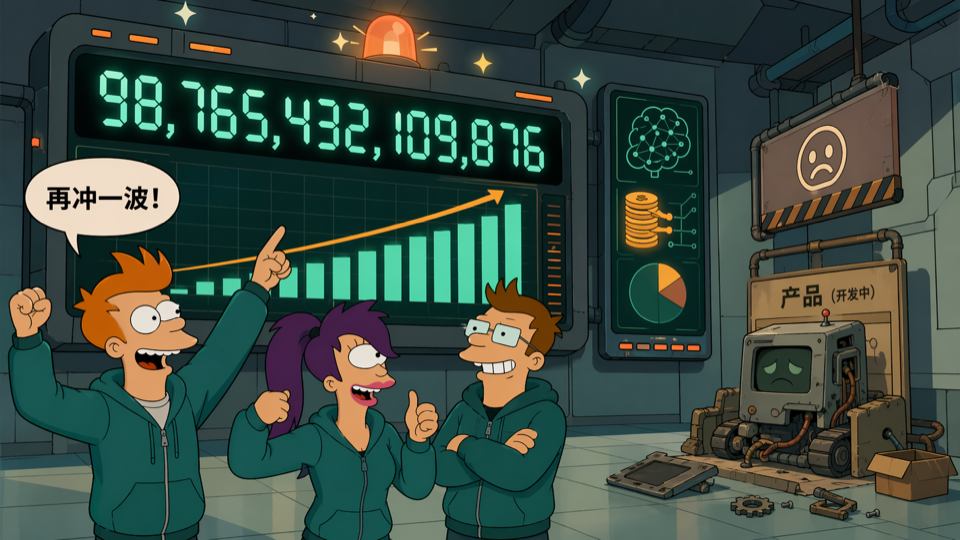
Even if only half of the promise cashes out, it is enough to rewrite the labor market. Companies are not going to wait until the technology is 100 percent mature before cutting people. Once they see that work previously done by twenty people can now be handled by ten plus a pile of agents, they will recalculate headcount accordingly.
The outside market can already smell this. Internship slots are shrinking. Entry-level roles are visibly contracting. Few people are seriously investing in the junior training pipeline. Long term, that is obviously a problem: without juniors, there are no future seniors. But quarterly reporting cycles are much shorter than talent-development cycles, so if headcount can be cut, it will be cut first.
So on the question of whether entry-level programmers are in trouble, I do not have any romantic answer. In the short to medium term, it looks rough. The old path of “spend a few years as a junior developer, gradually learn the system, then slowly grow” is likely to get compressed very hard.
People who cannot code do not automatically level up
I also do not agree with the opposite claim that nobody needs to learn coding anymore. At least so far, I still do not believe that someone who has never hand-written code, never built projects, and never carried an oncall incident can jump directly into directing AI to write production code.
Making a small toy is of course possible. Production is not that level of difficulty. If you do not have engineering judgment, if you do not have a systems feel, if you have no instinct for edge cases, dependencies, test strategy, or rollback risk, then you are not going to control these tools well enough.
So the more accurate claim is not “people who cannot code can now replace programmers.” It is “people who can code, with AI, can drive the required number of programmers much lower.” The first sounds like myth. The second looks much closer to reality.
A new profession, and a new kind of drudgery
That is why I increasingly suspect the new profession is not “everyone becomes a programmer.” It is something closer to an early-stage AI foreman. You need to build feedback loops, set constraints, break down work, inspect intermediate artifacts, and know when the model is hallucinating and when you must take over yourself.
This is obviously connected to traditional programming, but it is not entirely the same job anymore. It feels more like engineering, product, operations, review, and management being kneaded together, then amplified by models on the execution side.
The cost is obvious too. Efficiency is higher, but people are genuinely more tired. I used to work under forty hours a week. Now it is often sixty-plus, because I am watching several semi-automatic systems at once. They all look like they are working for me, but each one is continuously demanding my attention.
It also removes a layer of enjoyment. A lot of the time now goes into planning and acceptance, and the role feels closer to being an around-the-clock contractor foreman. It is not surprising that AI is meant to improve efficiency, yet the earliest heavy adopters end up turning themselves into high-frequency dispatchers first.
What happens to the people who get displaced
Even so, I am not going to join the camp that says “AI is all a bubble.” That line is just as lazy as “AI can do everything.” The hard part is that this moment contains both bubbles and very real productivity gains. Precisely because there is real value inside it, the consequences are harder too.
If I had to make a call, I would say that the number of programmers inside large companies will probably decline visibly over the next few years, and even cutting the population in half would not sound outrageous. The first people squeezed out will be those with high replaceability, clearly bounded tasks, and no distinctive judgment. After that, other highly digitized industries will follow. Code is simply the first group getting hit.

In that sense, there is a certain dark humor in programmers becoming one of the earliest candidate groups for replacement. I keep thinking of the No. 5 Development Zone bus I used to ride as a student in Dalian. If you did not hold the rail tightly, one stomp on the gas and you flew backward. That is what this bus feels like now: it keeps accelerating, the people already on it can barely stand, and the new grads still trying to climb aboard have it even worse.
The end state is probably not “programmers disappear.” It is more like the industry structure gets rewritten. A small number of stronger people, armed with stronger tools, will do work that used to require large teams. A large number of people who previously existed as the training layer and execution layer will get pushed out of the main lane.
For individuals, this is no longer a question of whether to embrace AI. There is no real choice there. The more practical question is whether you can stop being a pure execution-style coder and become someone who can design feedback loops, judge quality, and turn AI into leverage.
As for the people who have already been pushed off the boat, there is no pretty answer yet. The realistic paths are limited: move toward stronger engineering judgment and systems ability, or go deeper into concrete business context instead of stopping at CRUD work; otherwise accept that programming is turning from a craft into dispatch, and learn how to tame these systems as quickly as possible.
But one thing is probably true: more and more people are launching big claims, while the amount of food in the cafeteria does not necessarily increase with them.
Tags: AI, Programming, Agentic Coding, Programmers, Workplace